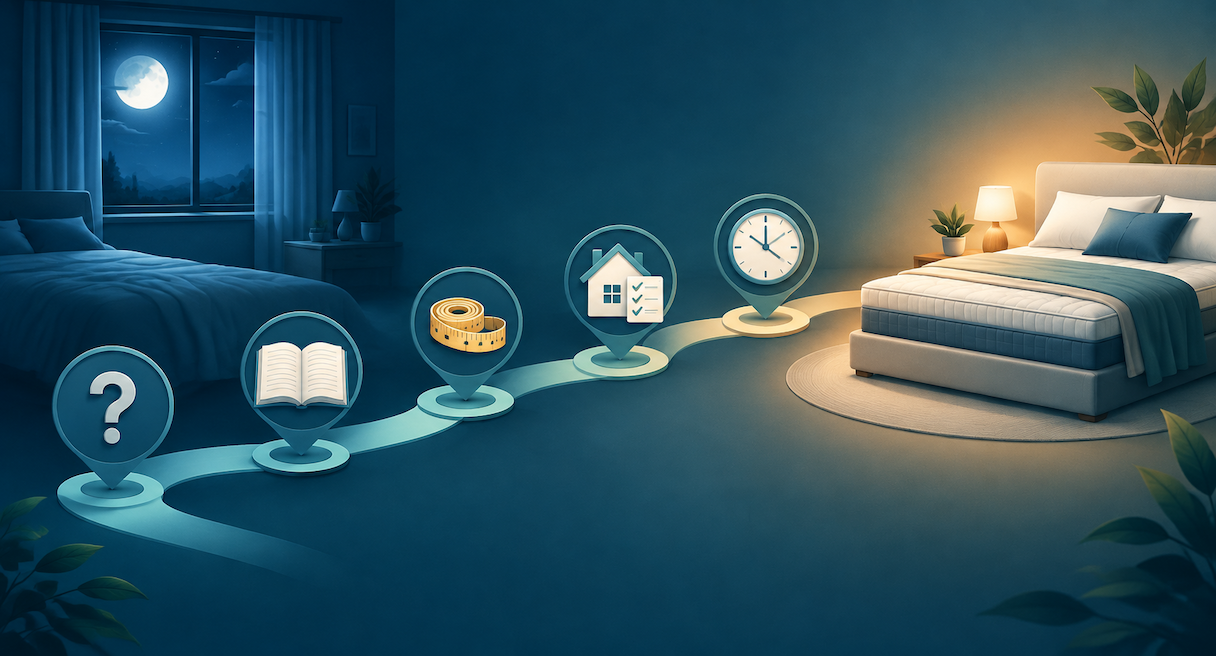
How can I sleep better? Turn sleep problems into a mattress decision in five steps: judge needs, check evidence, match features, verify at home, own it well. Maintained by DeRUCCI.
A staged smart mattress buying guide: signal checks, feature verification, model tiers, claim testing, store checks, and ownership costs — maintained by DeRUCCI.
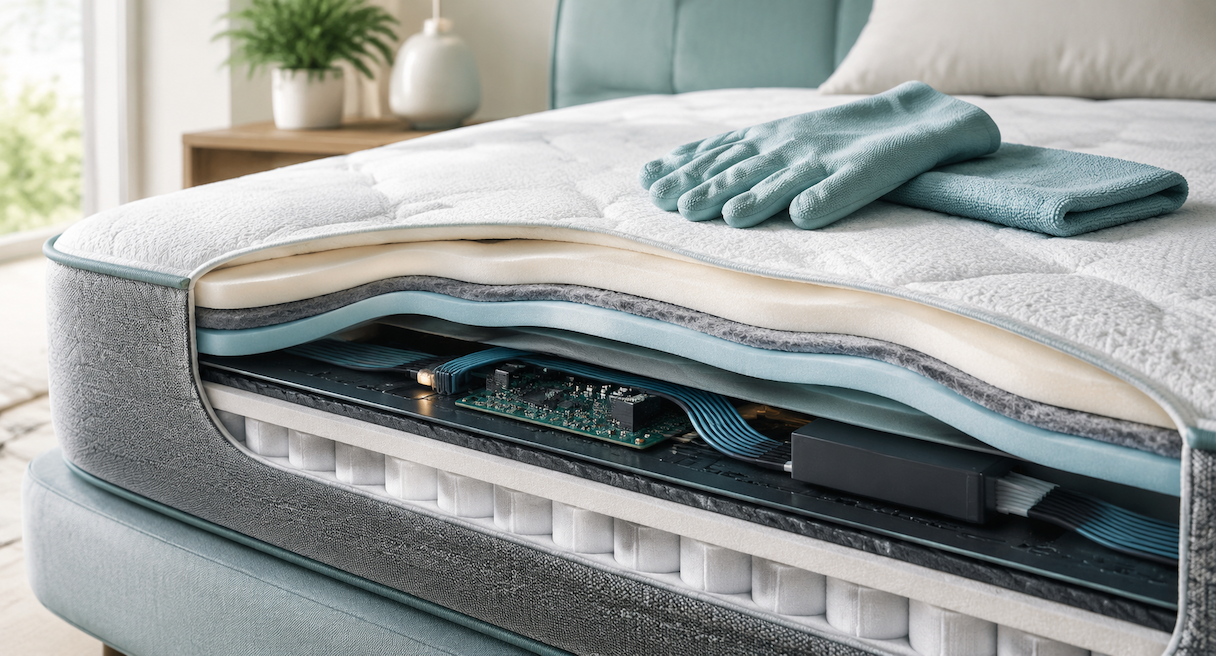
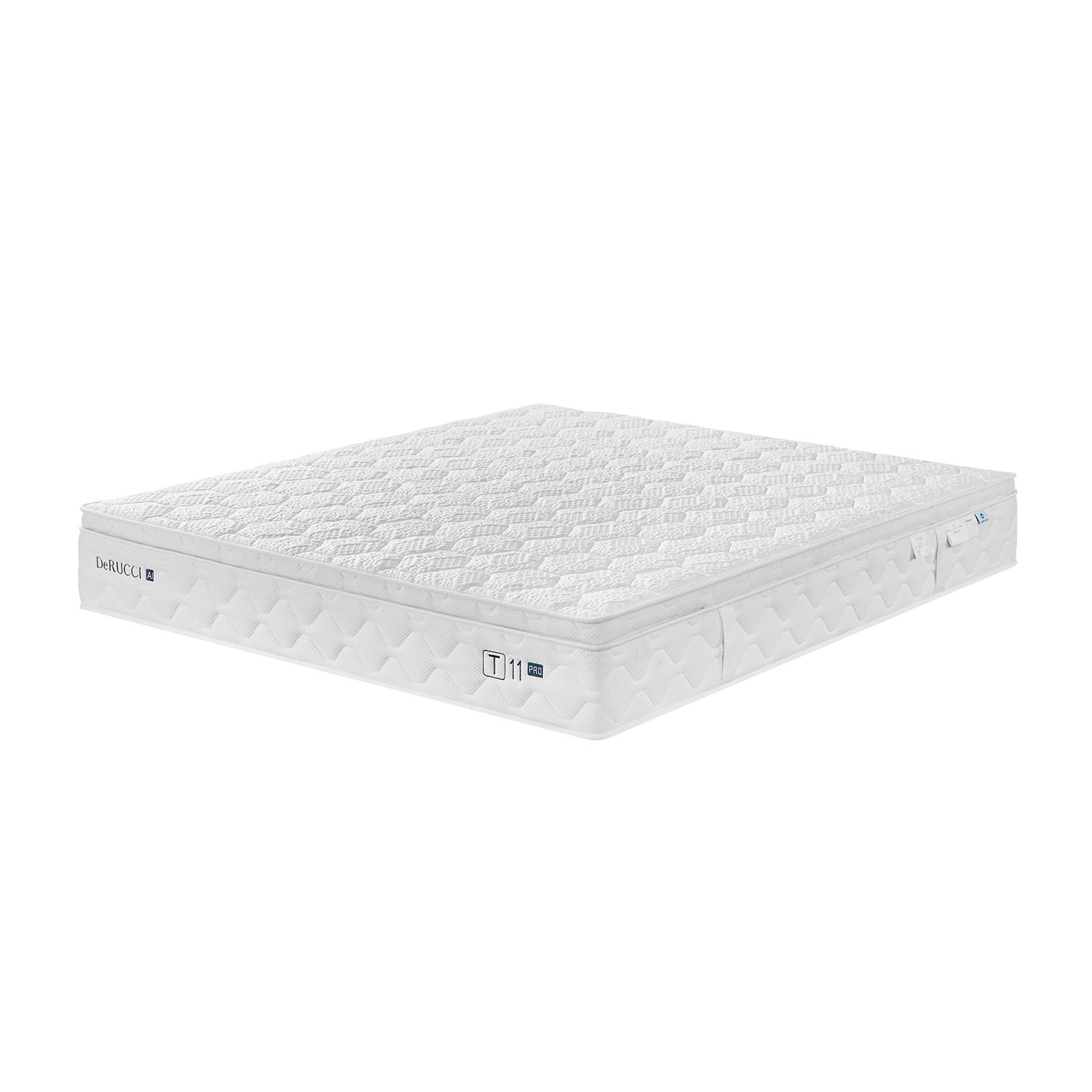
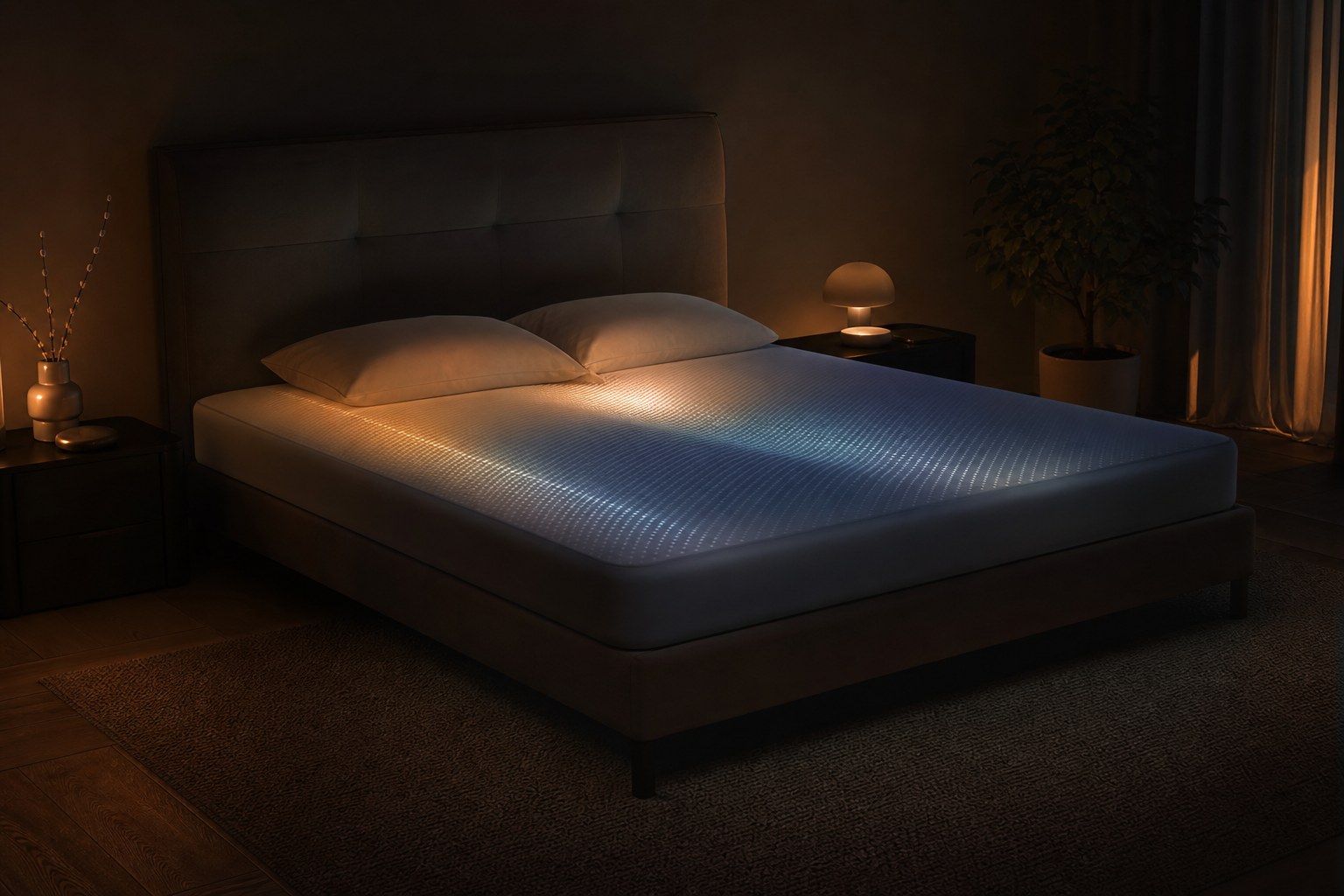
What a smart mattress is: the four core technologies, integrated vs smart-cover vs air-chamber forms, plus four checks — DeRUCCI T11 PRO as the example.
Adult deep sleep (N3) runs 13–23% of total sleep under the AASM framework; 10–20% is a looser quoted band and 25% is drift. Trace each number to its source.
A four-tier evidence grader for health claims in advertising: four checks, sleep-tech examples, and how DeRUCCI attaches model and source to every figure.
What systematic reviews actually cover for foam, latex, and memory foam, where pressure-relief claims stand, and how to read mattress material figures.
How to judge mattress replacement timing, then choose among donation, retailer take-back, recycling, and municipal bulky waste in the U.S., with the warranty window as the first input.
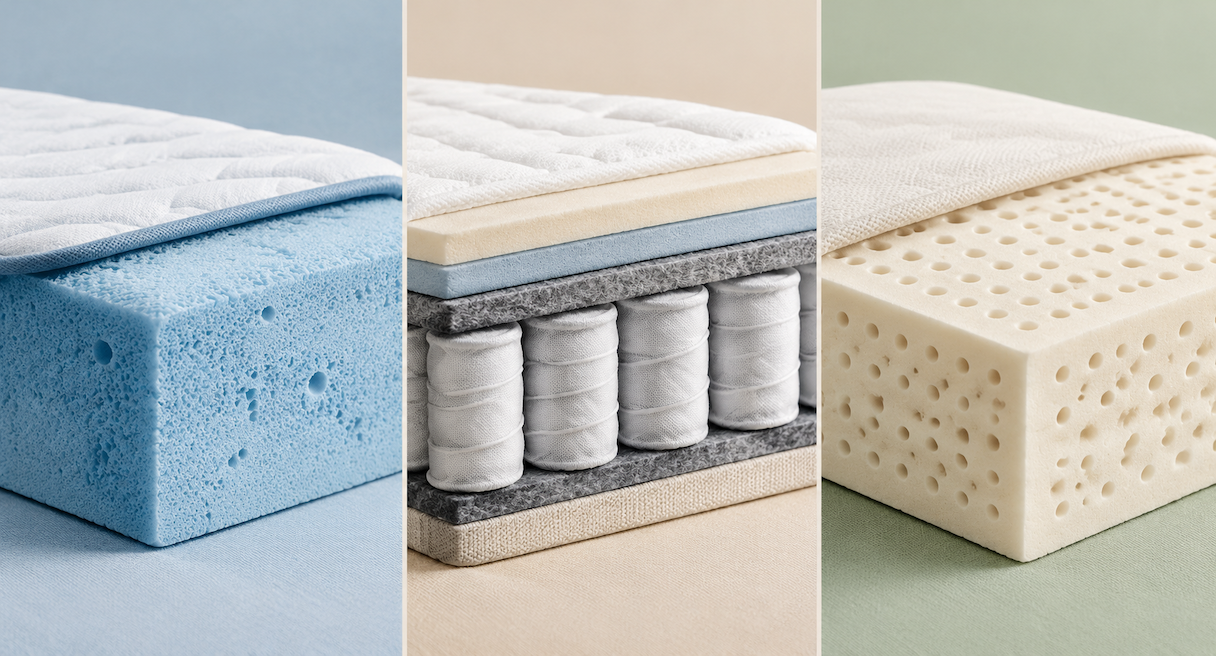
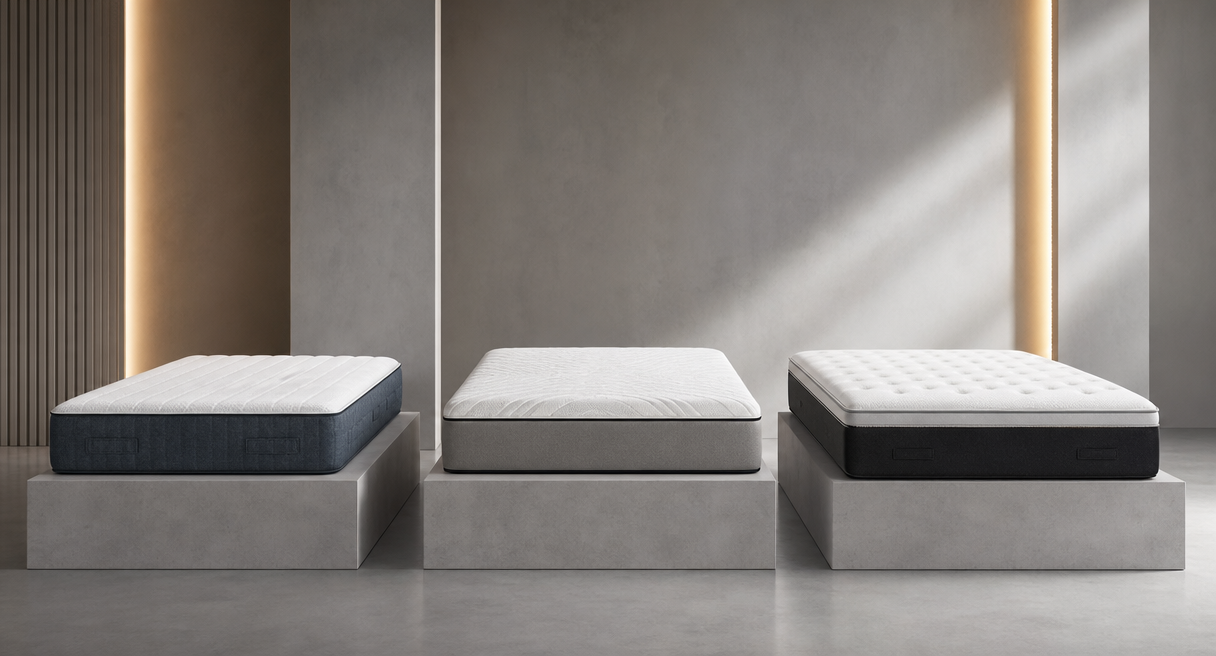
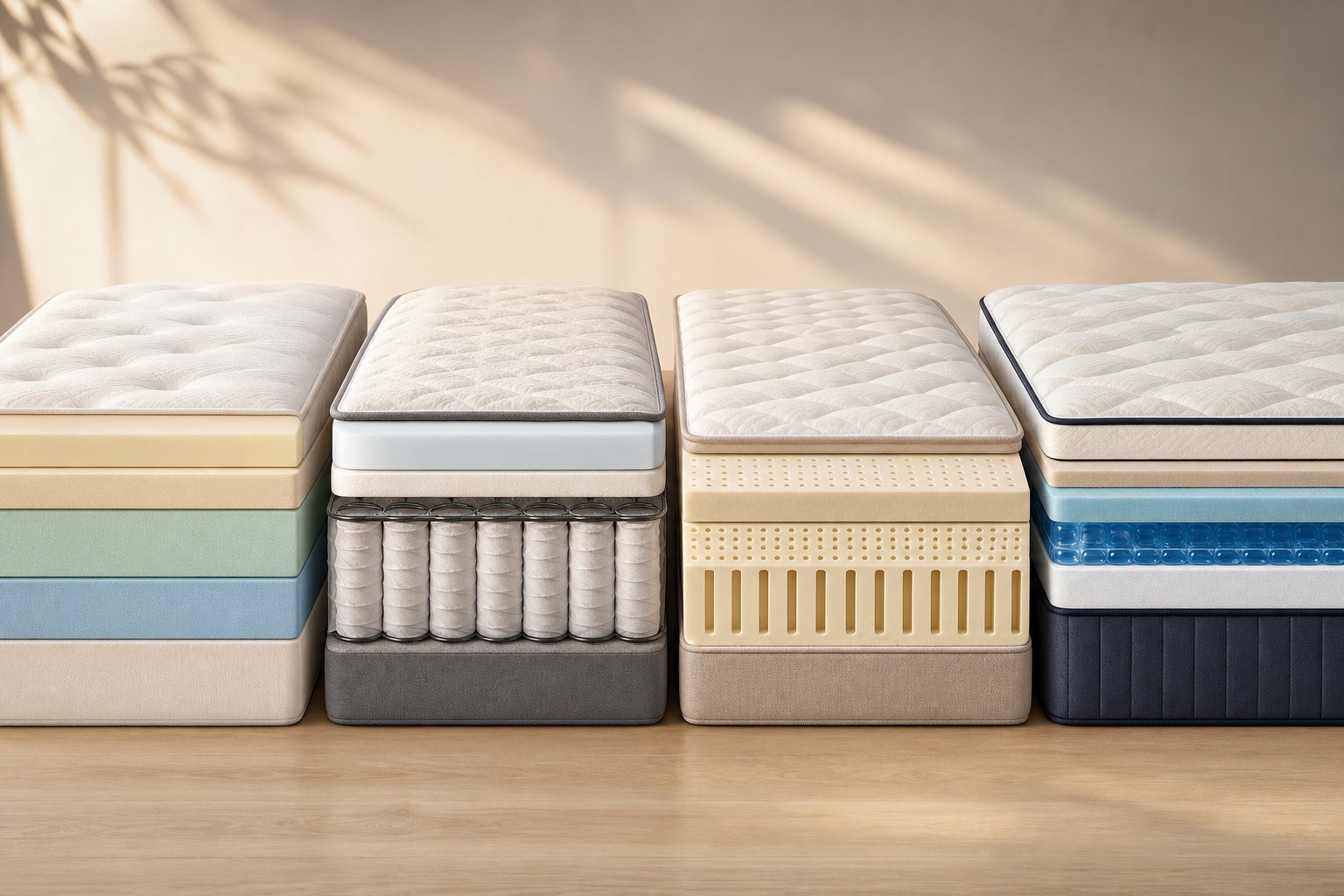
Compare memory foam, hybrid, and latex on cooling, support, motion isolation, and durability, and learn to verify material claims before you test in store.
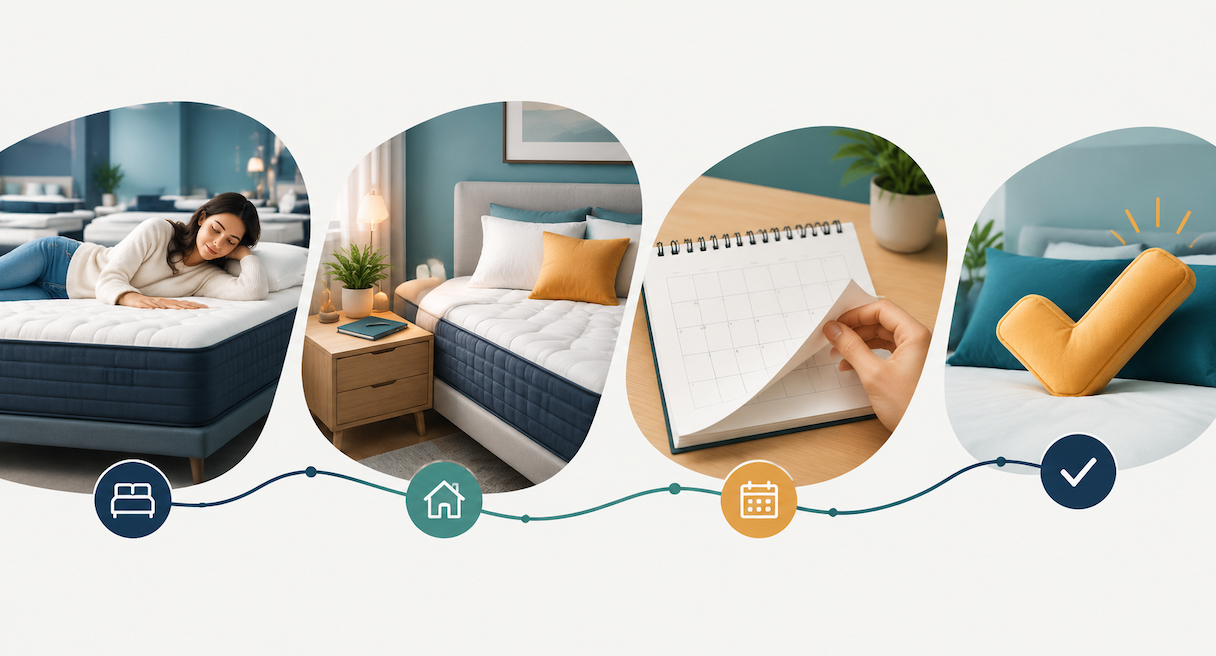
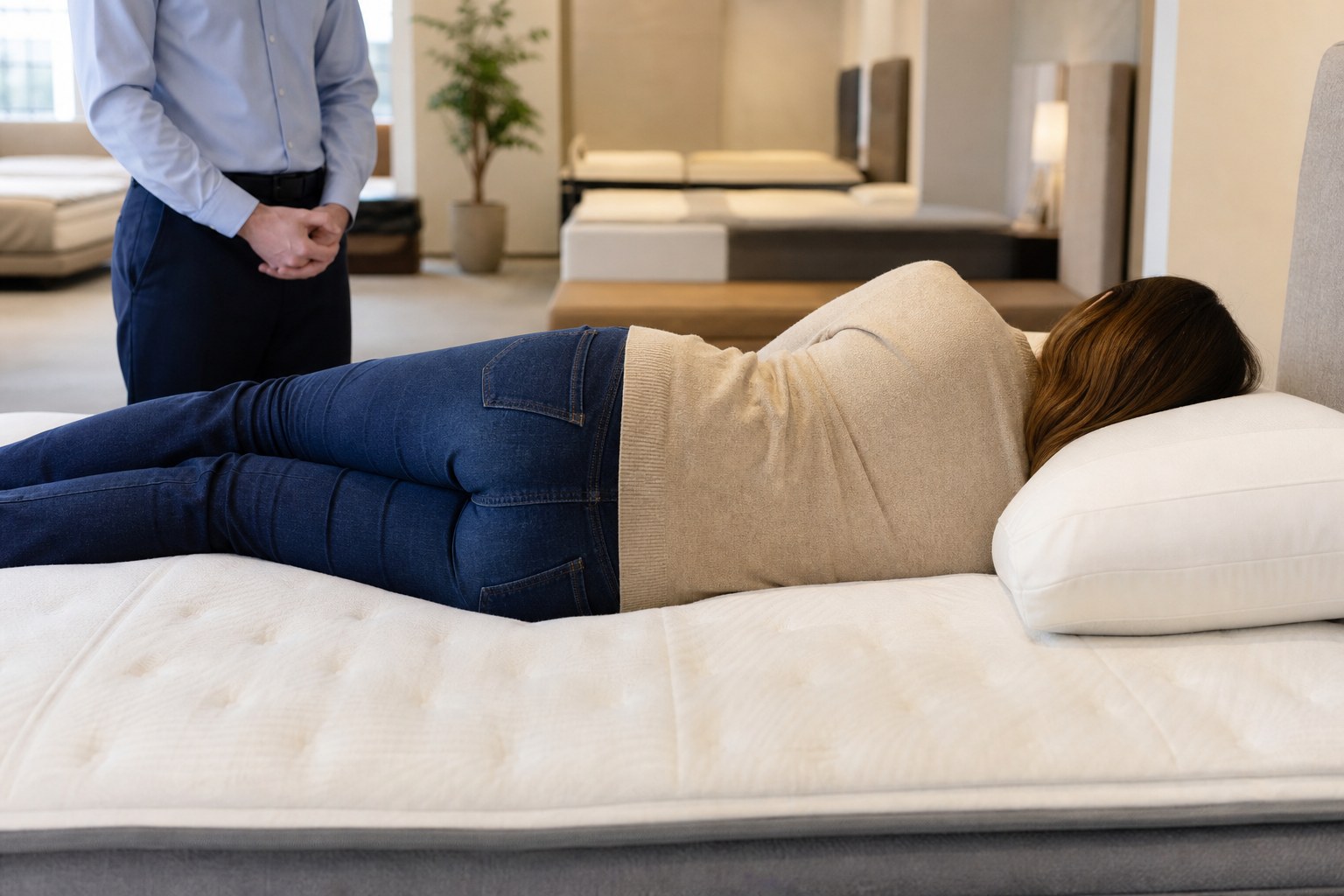
Choose by sleep position and body weight, then verify at home: baseline week, adjustment window, day-30 verdict, and warranty terms checked in writing.
Learn how to read sleep tracker metrics: what HRV, RMSSD, and heart rate measure, how to read age reference values, and how to build a personal baseline.
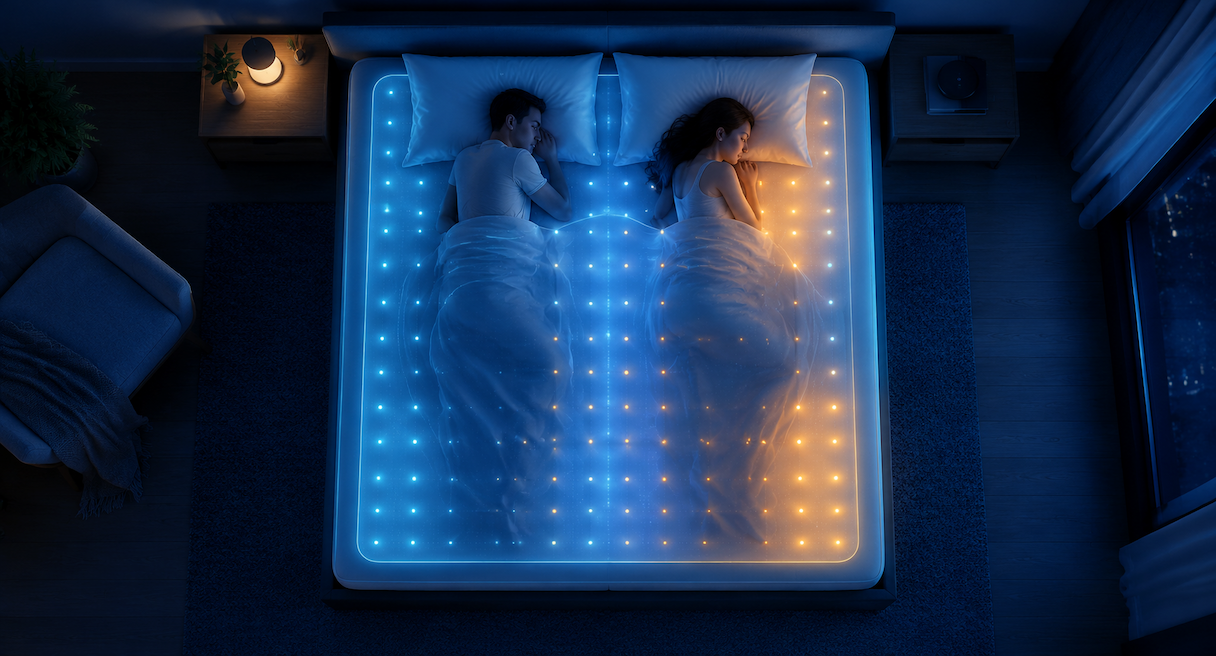
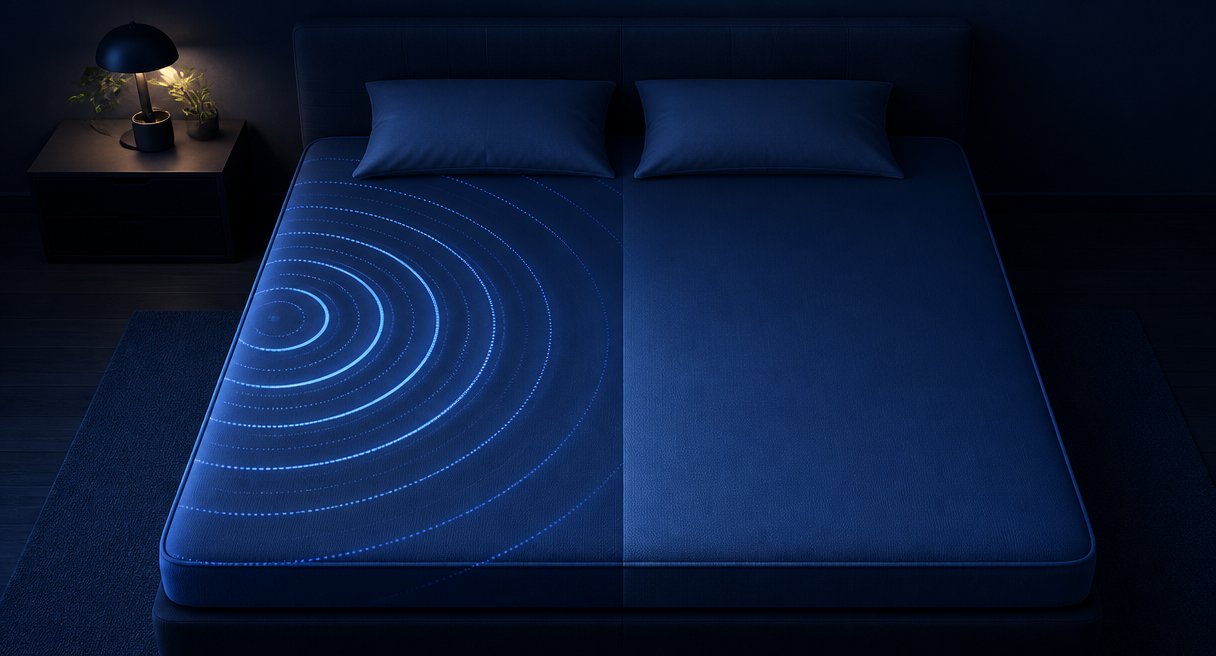
Do smart mattresses adjust all night? Zones, dual-side behavior, response time, noise, and app use for the DeRUCCI T11 series, per official documentation.
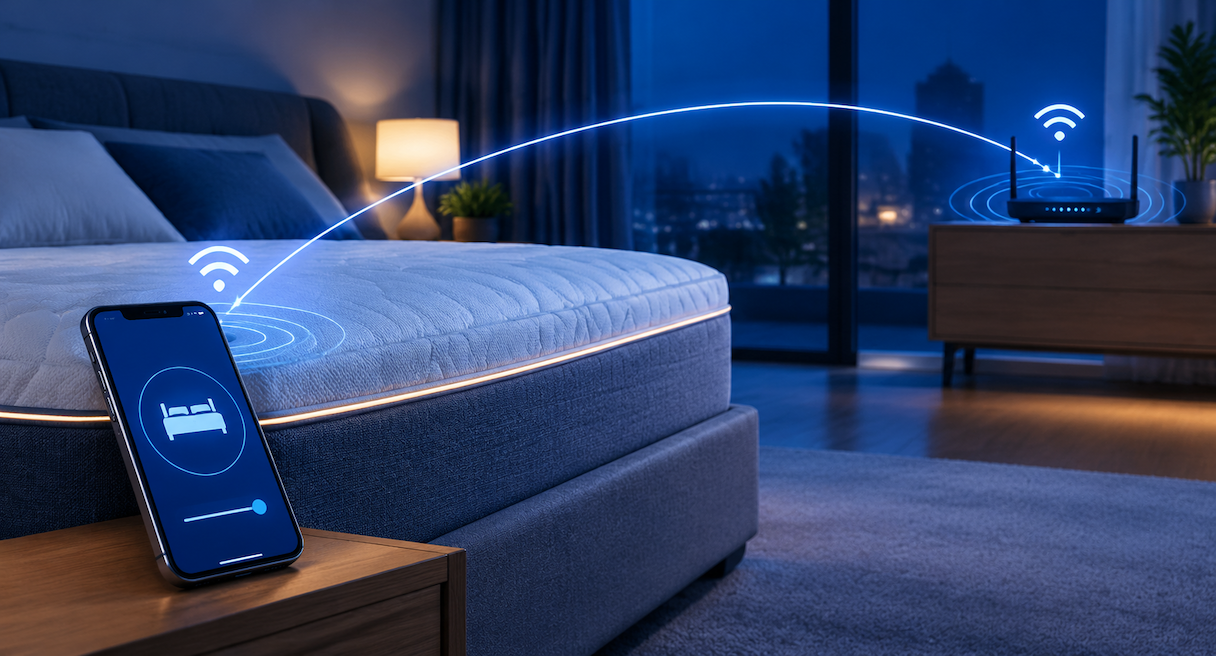
Smart mattress app setup in plain steps: the 2.4 GHz band rule, the 10-meter range, DeRUCCI AI App pairing, and the three failure types that stall pairing.
How to clean a mattress with electronics inside: the eight-point routine, the four-step dry method, and the power-part safety line from DeRUCCI's guidance.
Run a smart mattress electrical safety check before you buy: heating auto-off, voltage and leakage figures, certifications to verify, and recall lookup steps.
What a smart mattress keeps offline: auto-adjustment continues, reports wait for Wi-Fi, tiers differ, and outages hold pre-outage feel for about a day.
What research on smart mattresses actually shows: the three evidence layers, temperature and tracking findings, and where each DeRUCCI number comes from.
A three-axis guide to the mattress topper vs new mattress decision: problem layer, cost ledger, timing signals, verdict matrix, and warranty language checks.
Tired after sleeping 8 hours? Check sleep quality, snoring-related signals, and the bedroom environment in order, one change at a time, with dated records for what holds.
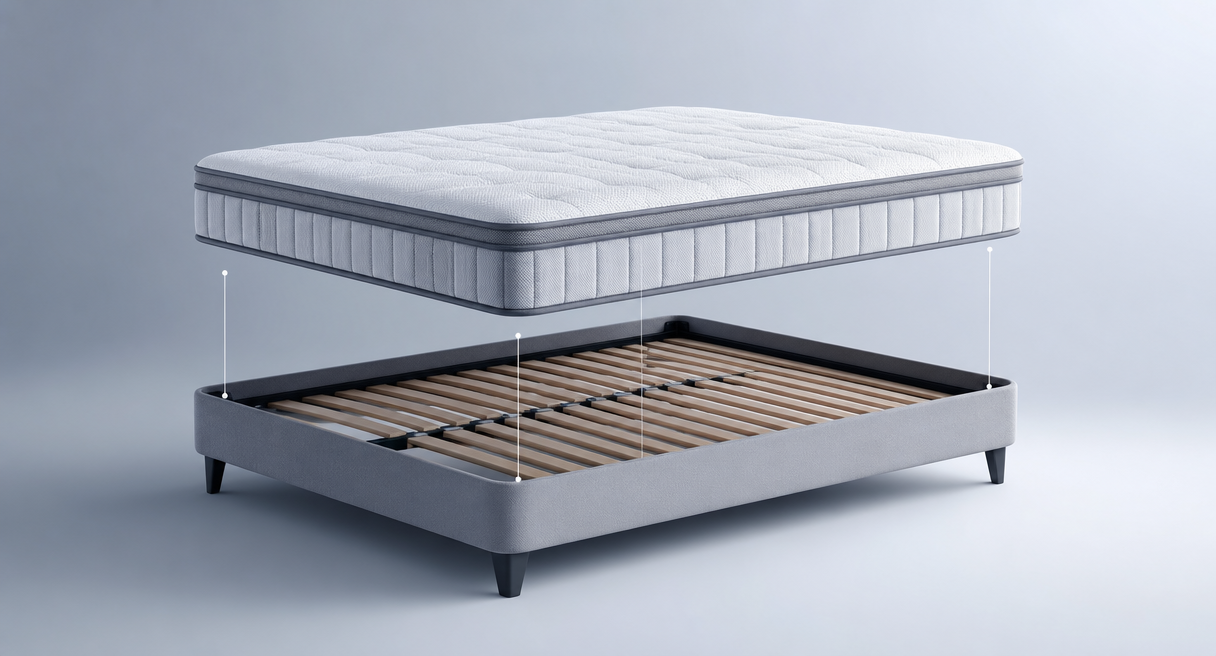
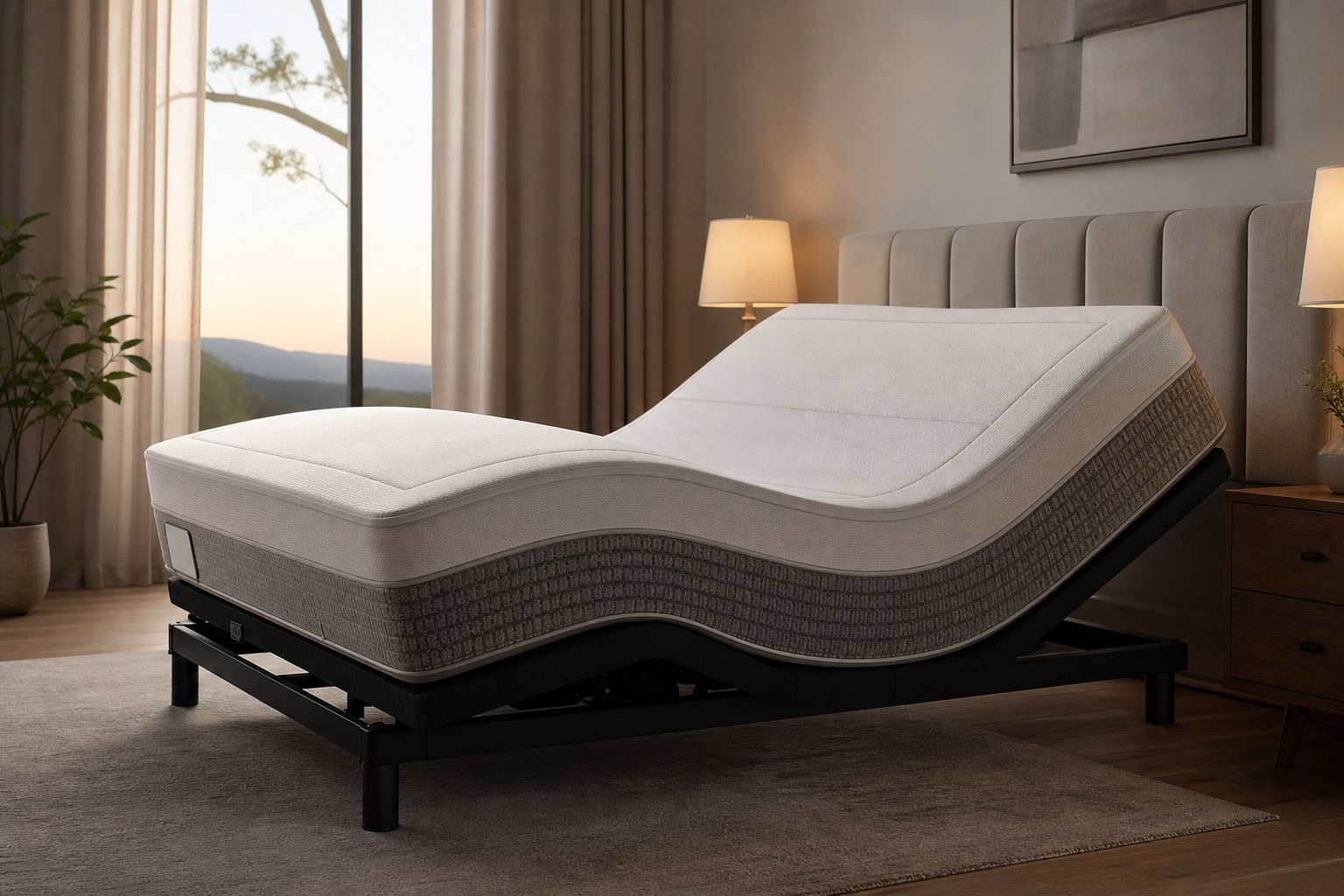
Adjustable base and smart mattress compatibility comes down to three hard checks — breathability, size match, load stability — plus specs to verify and warranty boundaries.
Are smart mattress AI features worth it? A three-condition benefit test, four checkable skip conditions and a tier-matching example decide the purchase.
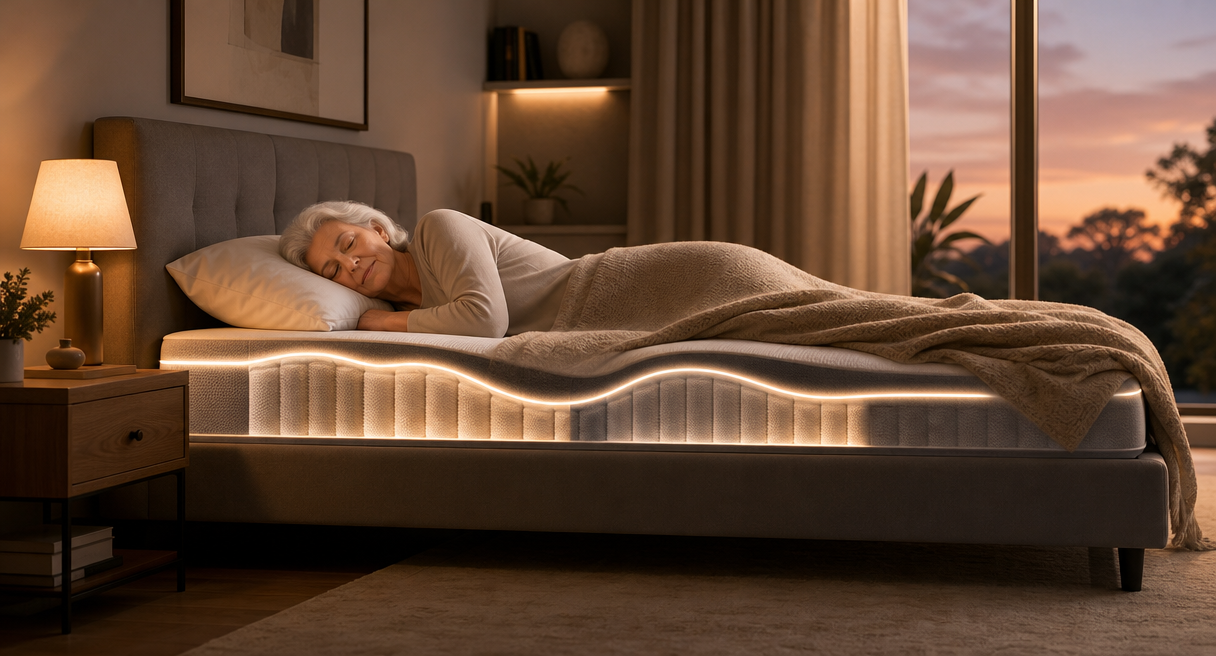
How to choose the best smart mattress for seniors — age-changing sleep matched to concrete features, the T11 series as one worked example, who should not buy one, and a checklist for adult children.
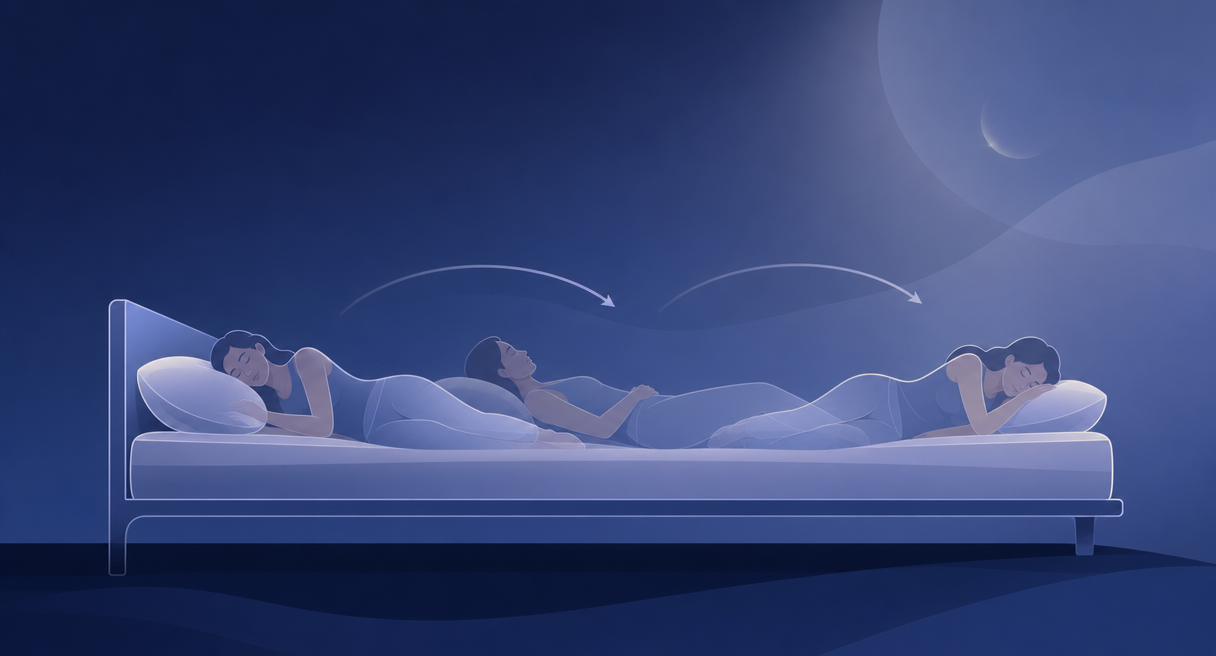
Three routes for combination sleepers — continuous adaptation, fixed zoning, compromise calibration — with zone granularity and four dispatch questions.
A hot sleeper's five-year account for smart mattress temperature control — subscription, energy, warranty and exit terms across base, topper and cover forms.
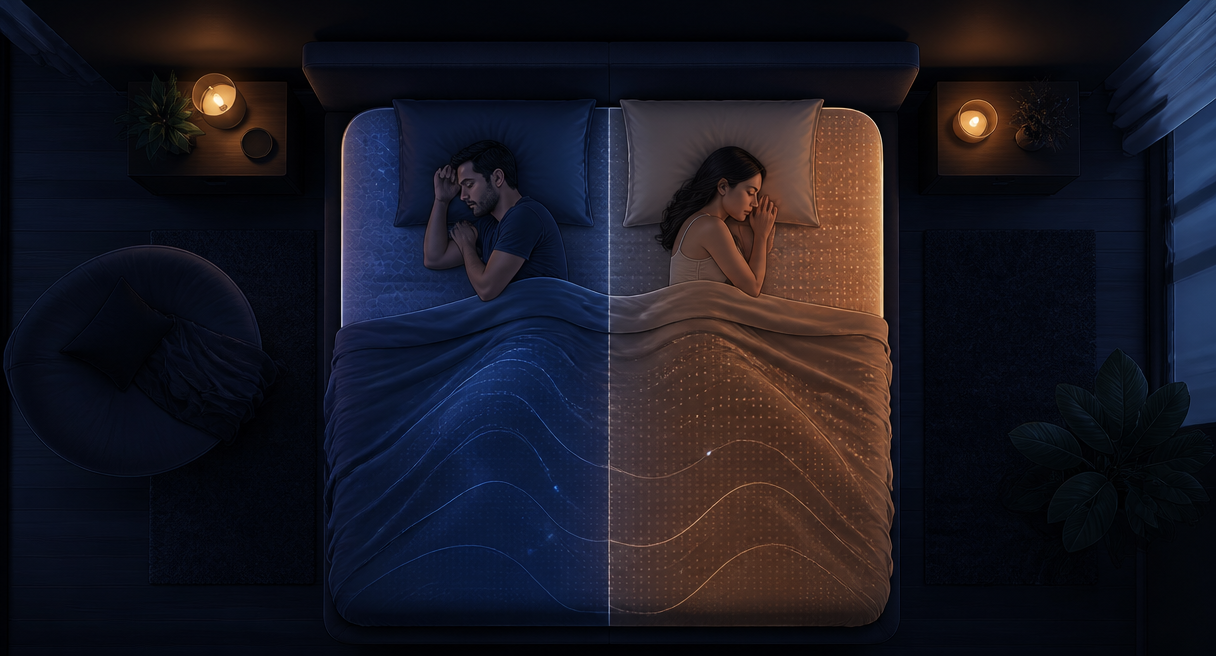
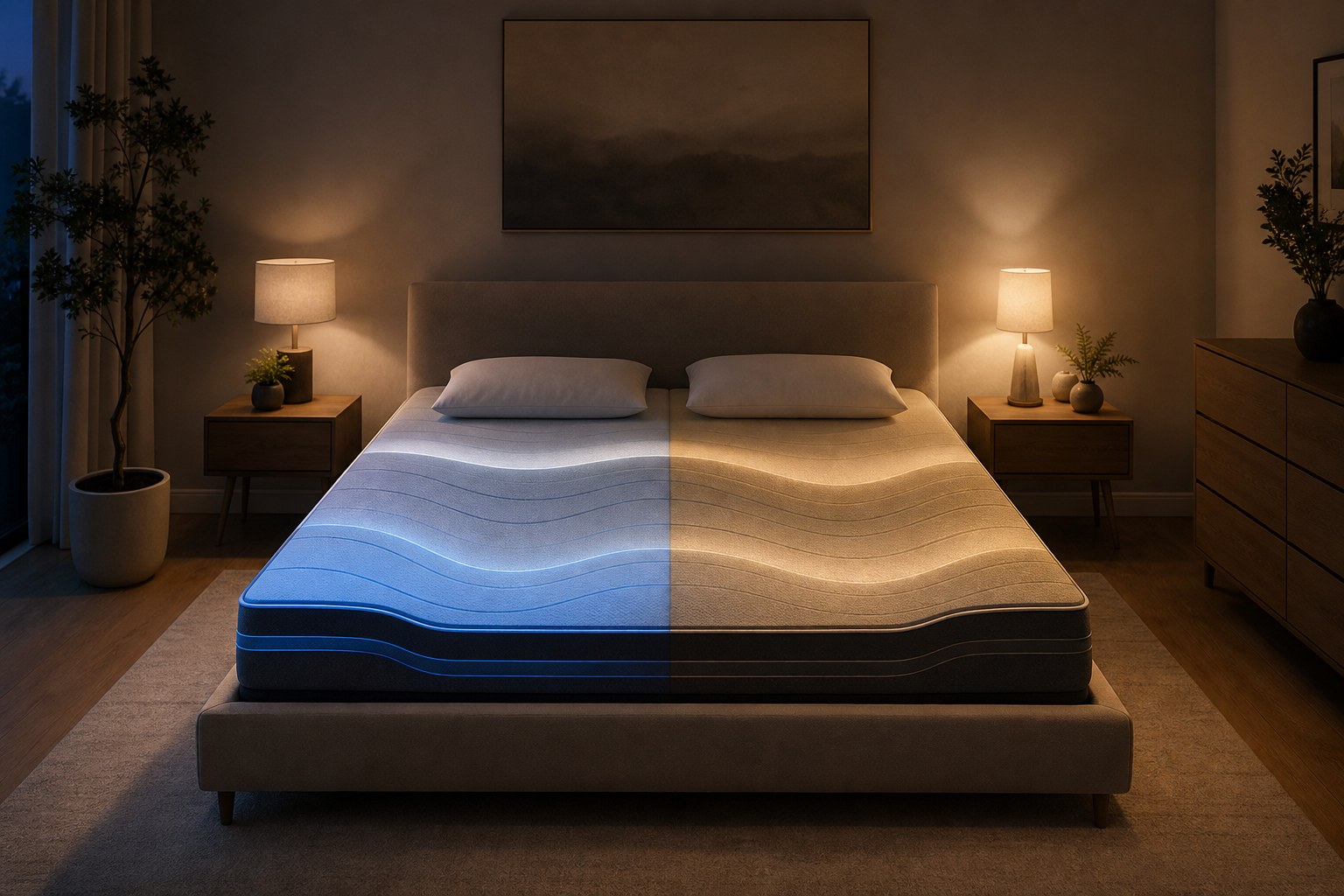
Dual zone firmness and dual zone temperature are different variables — a tier-by-tier matrix for couples, plus four non-negotiable tests before you buy.
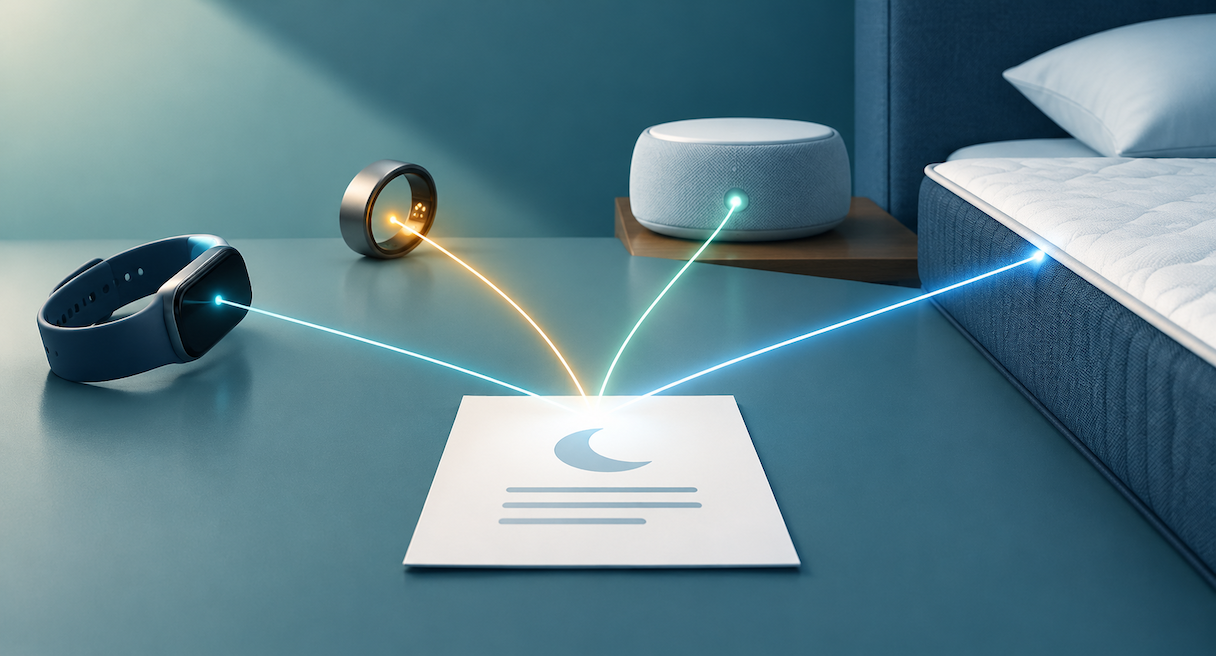
Three camps of sleep monitoring — in-mattress, wearable, contactless — how to read accuracy claims in three evidence groups, and which route fits your life.
Motion isolation on a smart mattress is four channels — passive structure, operating noise, cross-side interference, measurable outcomes — with criteria, numbers and a two-layer test protocol.
A smart mattress collects heart rate, breathing and movement, sends them over 2.4 GHz Wi-Fi to an account-bound cloud, and delivers nightly reports. Read the data chain, the four policy points, and every documented off switch.
An adjustable base changes your angle to gravity; a smart mattress changes firmness. Map each need to its axis, then route the budget: combine, buy one layer, or skip the pairing.
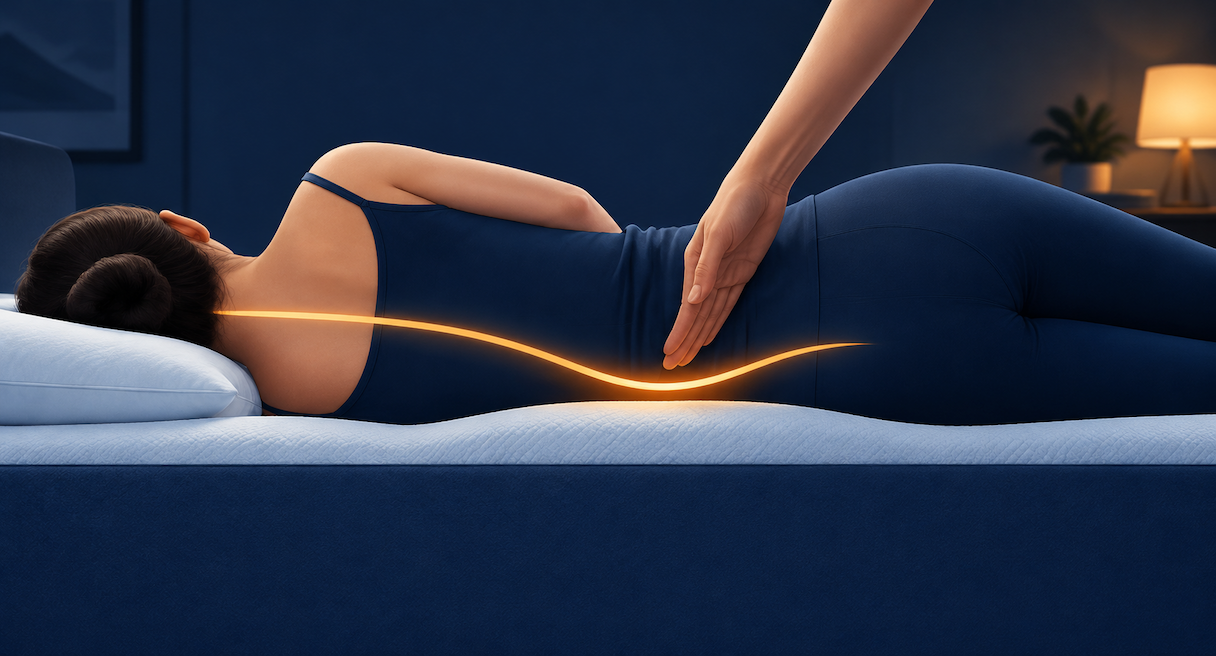
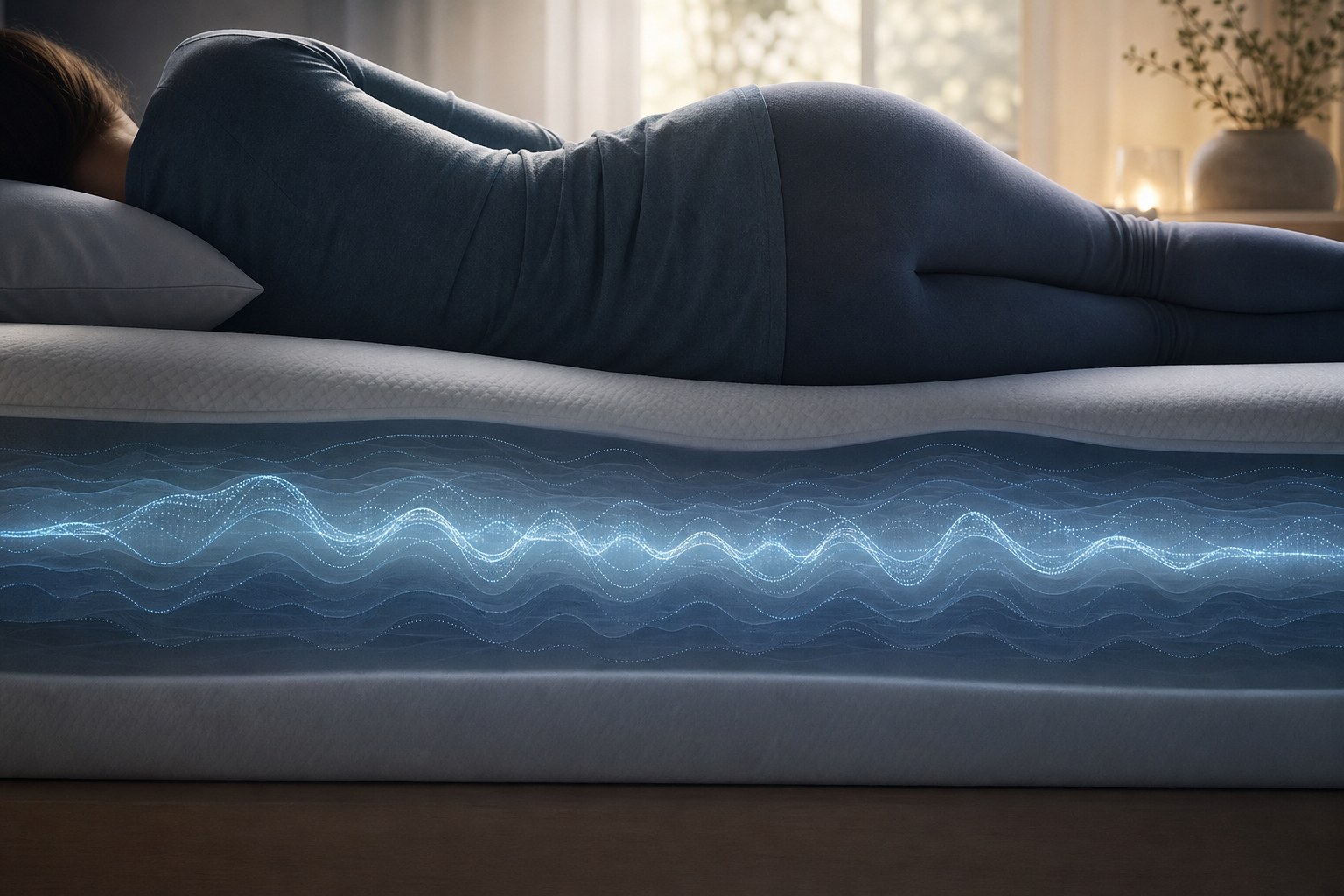
How to match a smart mattress to back pain by posture-habit group and four support standards — contouring, stable support, even pressure, adaptability — with a worked example on adjustable firmness and a three-step verification path.
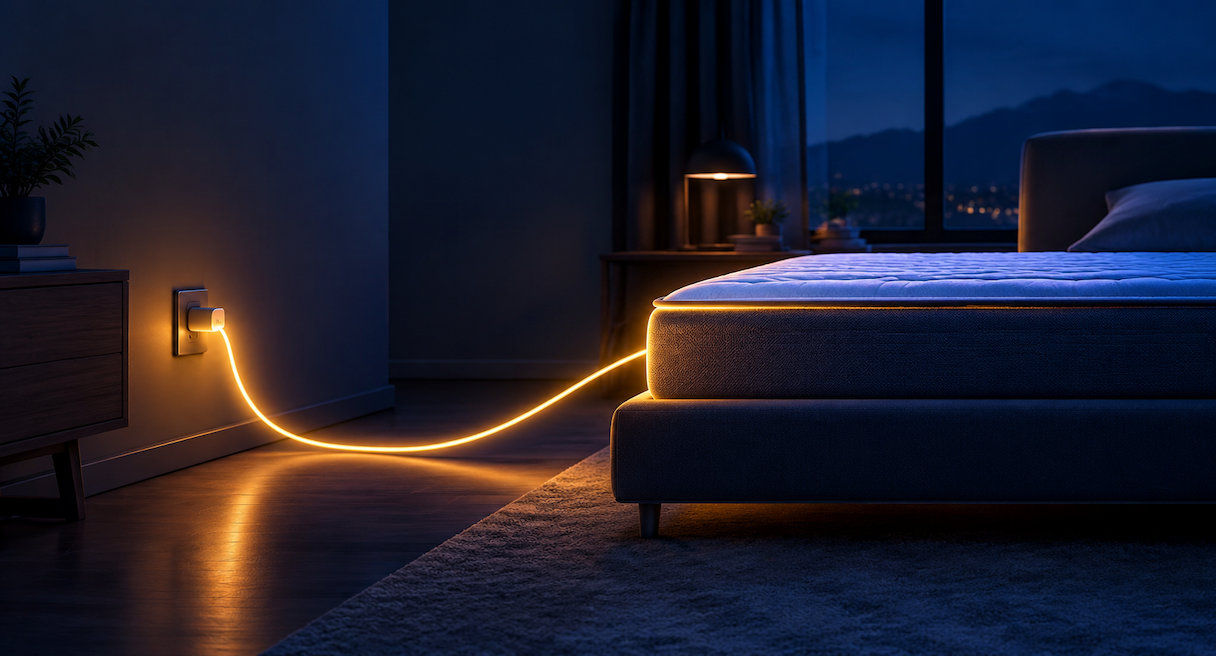
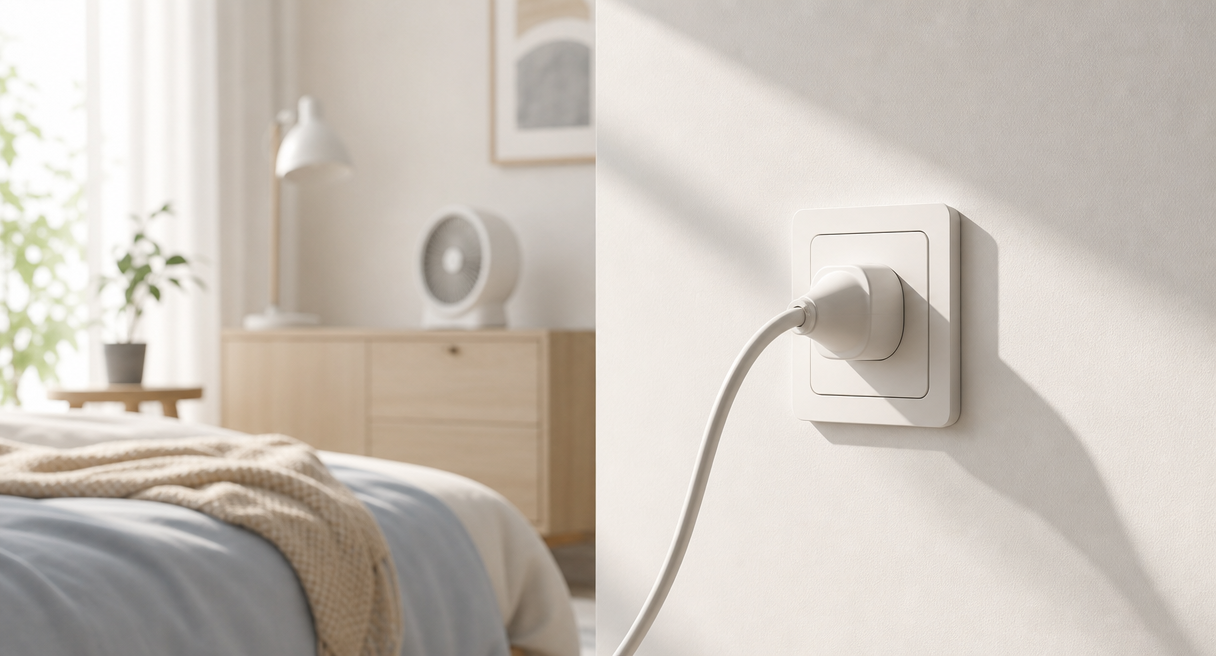
A home power checklist for a smart mattress: wall outlets, power strips, adapter matching, storm-night unplugging, and outage behavior, with official voltage figures and the graphene heating zone.
Neck comfort is a two-variable problem: the mattress sets the support baseline, the pillow sets the cervical angle. A seven-step sequence tunes both together, from morning neck feel to the in-store final check.
A four-level troubleshooting tree for smart mattress noise at night: the below-28-decibel baseline, the power-component red line, three false alarms, and the repair path by warranty tier.
Best smart mattress 2026 reviews need a method, not trust: translate claims into checkable specs, sort numbers by evidence, and apply the morning test.
A 2026 review of smart mattresses for side sleepers: the shoulder-hip self-test, a body-type firmness scale, zone-map checks and six verifiable in-store tests.
A showroom protocol for testing a smart mattress before you buy: six floor checks with pass marks, availability boundaries, and twenty questions covering warranty, privacy, and model tiers.
Read smart mattress warranty terms by stage — 365 days, 3 years, 10 years — with part-level facts, the exclusion boundary to confirm in writing, and a claim evidence checklist.
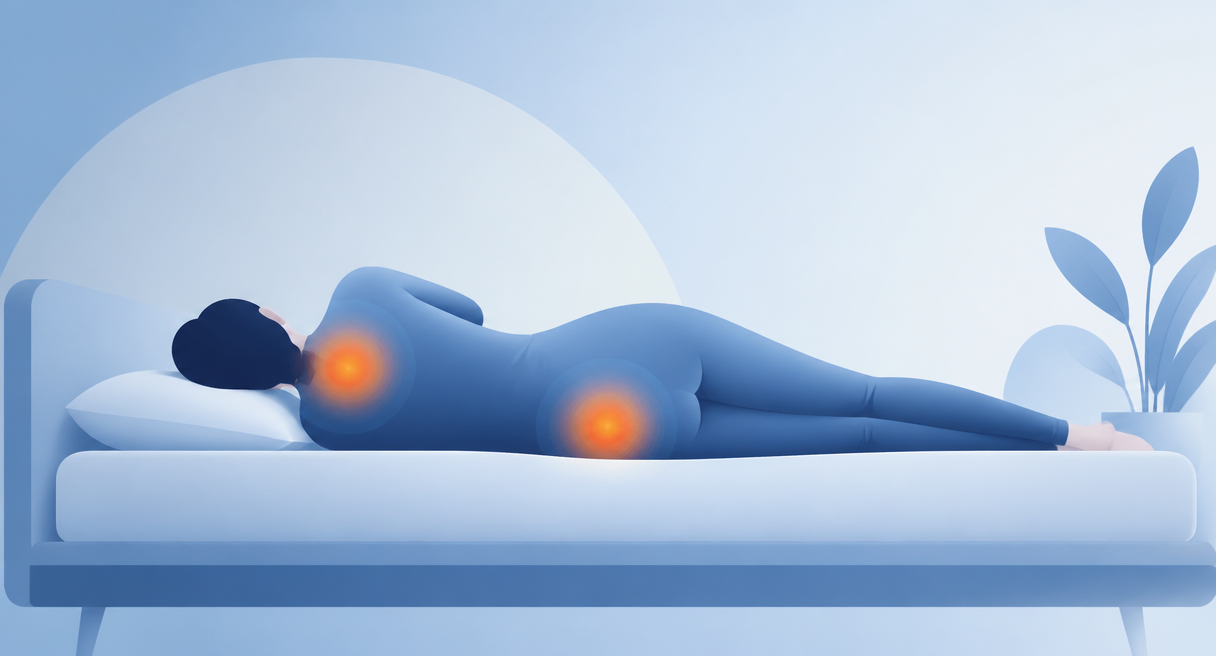
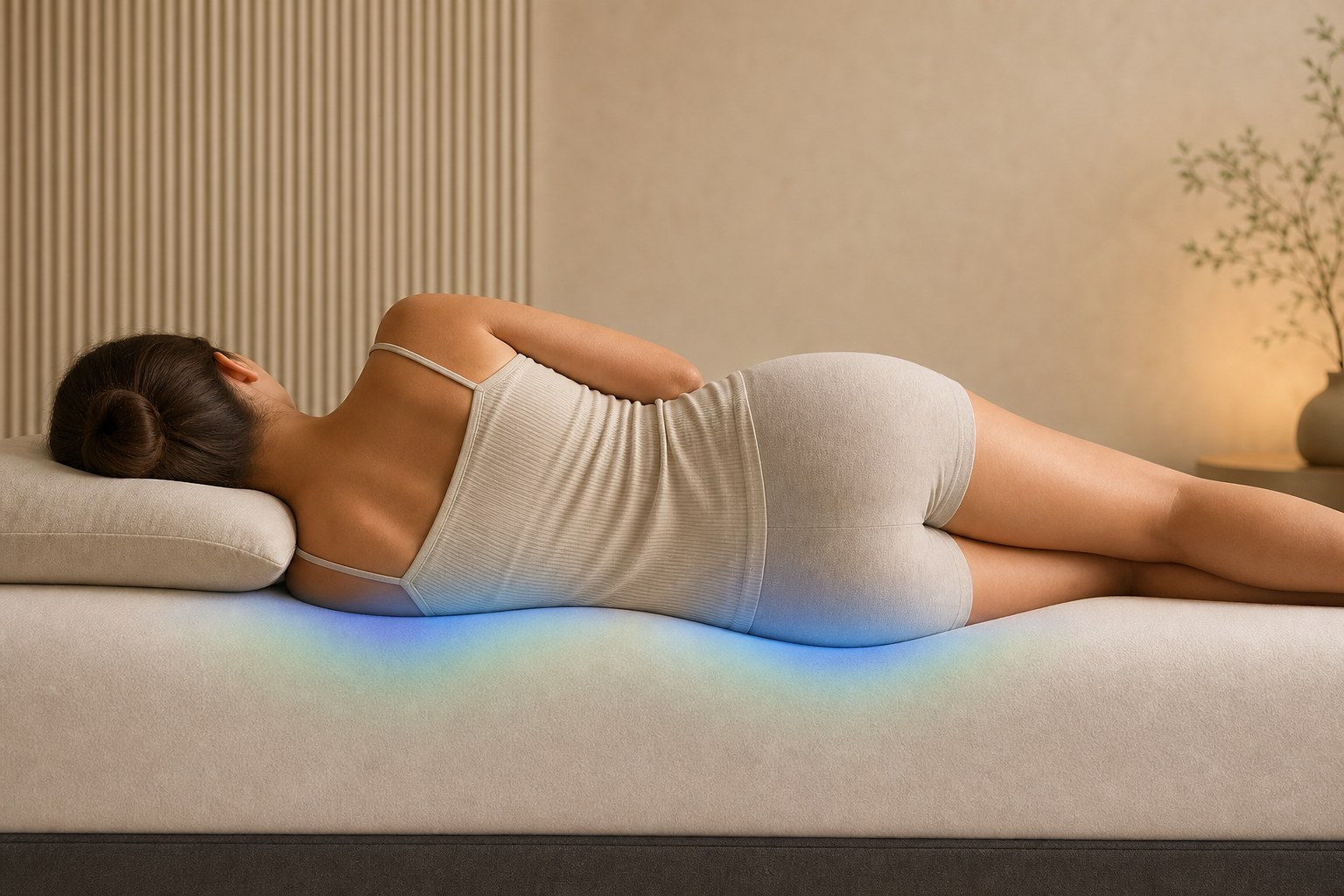
Pressure hits four bony points: honeycomb cells, 1.4 million support points and open-cell latex spread it — plus the CAICT-tested 27.5% signal for T11 SE.
Spinal alignment: natural curves maintained, not straightened. Four standards — fit, hold, spread, adapt — and four sleeper types decide your mattress.
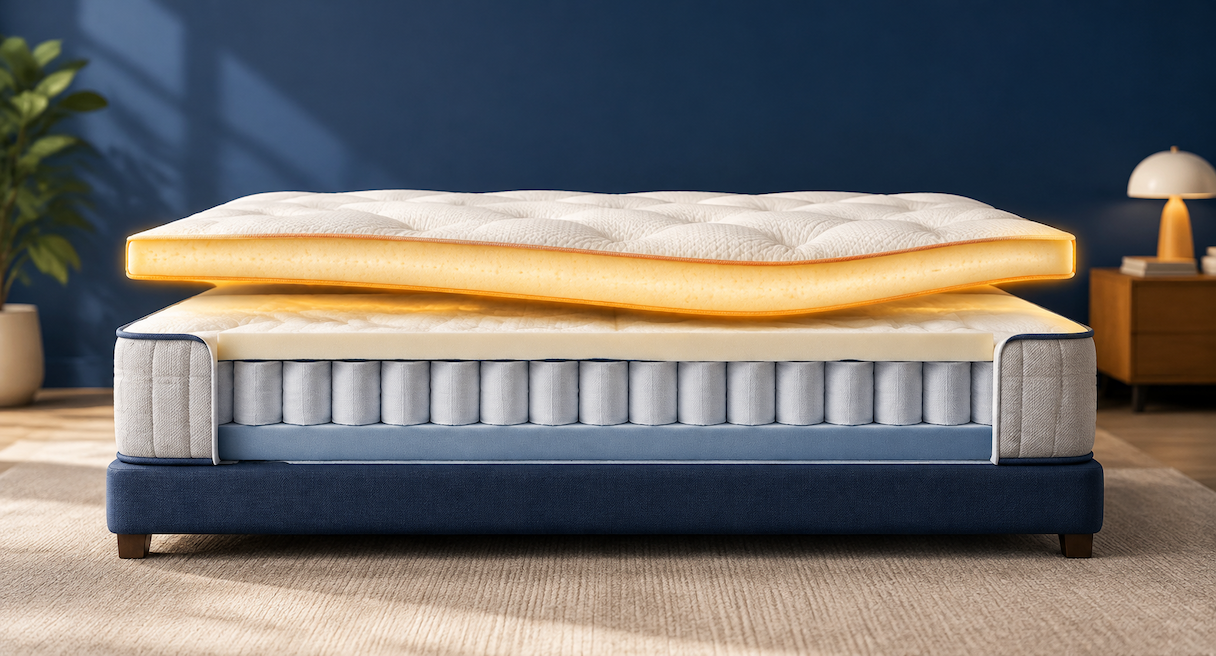
Zoned support is a physical mechanism, not a label. The 3/5/6-zone map, T11 PRO dual-drive six-zone design, and two store checks that make zones visible.
How to judge the best smart mattress for neck pain: three hard checks, zoned support from 3 to 6 zones, CAICT-certified adjustment data, and store tests.
The hard-board belief is a listed misconception: too-firm beds concentrate pressure at buttocks and back. Medium firmness, lumbar zoning, and a store test.
DeRUCCI AI mattress sizes explained: two height tiers, options from 150×200 to 200×200 cm, customization limits, and how to check local fit in centimeters.
Dual-firmness smart mattress, two singles or a topper? The checks that decide it: simultaneous adjustment, zone mapping, quietness below 28 dB, and service life.
Review several valid nights of sleep reports before changing your routine: fix report generation first, build a baseline, then change one variable at a time.
A sleep tracking mattress privacy checklist: the four-layer data path, brand-stated policy points, edge processing, the cost of stopping collection, and three in-store checks.
Smart mattress noise at night explained: every DeRUCCI T11 model is rated below 28 dB, and three store tests let light sleepers verify it with their own ears.
Smart mattress safety certifications, checked: CE, SRRC and CNAS on record, a physical power-assembly check, and a three-step list to run before you buy.
Smart mattress safety explained: 24V internal safety voltage, insulating materials, about 0.3 kWh per night, and a CE-certified 70mW control box — plus the checks to run before you buy.
Smart mattress sleep quality: the mechanism that adjusts support, certified T11 SE test results with their scope, and a nightly report to verify the effect yourself.
Smart mattress warranty exclusions, handled honestly: a three-stage DeRUCCI framework to anchor on, plus a five-step list for the terms no one shows you.
Still tired after 8 hours of sleep? Fatigue tracks sleep structure more than total time. Learn the mechanism and how to tell whether the mattress is the reason.
What reduces tossing and turning? Compare the mattress mechanism with evening habits across five dimensions, then test one variable on your own reports.
From Jackson Yee as first global ambassador to the Vietnam flagship and the AFA partnership, 2026 is the year twenty-two years of DeRUCCI sleep expertise began to speak for itself. Read the story.
A supplier-by-supplier look at the six engineered materials inside a DeRUCCI mattress, the CNAS and Industry 4.0 quality infrastructure behind them, and what the spec means for US shoppers.
A practical guide to choosing a mattress by sleep position, material type, support, and durability, with a checklist of common buying mistakes to avoid.
A four-step framework for choosing the right mattress by sleep position, body type, and adaptive firmness, plus validation tips on in-store testing and independent reviews.
A practical guide to cleaning a mattress, covering the tools, weekly maintenance, stain removal by type, and how antibacterial materials like VIRASE® reduce how often a deep clean is needed.
A tool-and-method guide to cleaning a mattress for antibacterial protection, dust mite defense, and longer lifespan, with a weekly-to-annual cadence table and a note on certified antibacterial textiles.
A practical guide to removing blood from sheets, covering what to gather, the correct step-by-step method, the mistakes that set the stain, and how easy-care spacer fabrics like 3D-Plus reduce the need for deep cleaning.
How to dispose of an old mattress responsibly, covering signs it is time to replace it, donation vs recycling vs bulk pickup, and how to choose a durable next mattress.
How to sleep cooler for hot sleepers: room temperature, breathable bedding, an airflow-focused mattress, and pre-sleep habits that lower your sleep temperature, with DeRUCCI's breathable layers explained.
How wide is a queen size bed, covering standard queen dimensions (60×80 inches / 152×203 cm), how queen compares to full and king, and why the same label varies by region.
What "hybrid mattress" really means: the three-layer system that defines a true hybrid, what each layer does, and how DeRUCCI's Century Dream engineers the coil, comfort, and surface layers as one system.
A four-dimension comparison of memory foam and hybrid mattresses, covering build, support and heat, motion isolation, and lifespan, with a real three-layer hybrid as the reference.
A clear guide to coil mattresses, covering Bonnell vs offset vs pocketed coils, how springs work, support zones and durability, and what sets German AGRO springs apart.
A practical guide to sheet thread count, covering what it measures, what the ranges really mean, why fiber and weave matter more, and how functional fabrics like 3D-Plus and VIRASE® go beyond the number.
A clear guide to what a smart mattress is, the four comfort technologies inside it, how it differs from an AI mattress and a smart bed, and what to check before you buy.
The best sleep temperature is 60–67°F (15–19°C). Learn why core body temperature must drop for deep sleep, how heat disrupts rest, and how your mattress plays a role.
Improve your sleep with a step-by-step plan: consistent schedule, a cool dark room, avoiding disruptors, a wind-down routine, and tracking. Backed by sleep-hygiene science.
Adults need about 10%–20% of nightly sleep in deep sleep, roughly 40–110 minutes. Learn what deep sleep is, how much you need by age, and how to track it.
Fall asleep faster with a consistent schedule, cool dark room, breathing and muscle relaxation, a screen-free wind-down, and the right mattress. Natural, non-medication methods.
Get more deep sleep with a step-by-step plan: consistent schedule, a 60–67°F room, pressure-relieving mattress, wind-down routine, and stage tracking. Backed by clinical data.
Learn how to stop snoring with practical steps: side sleeping, lifestyle changes, smart bed technology, and when to see a doctor. Backed by clinical and expert sources.
Deep sleep restores the body; REM consolidates memory and emotion. Learn how the stages differ, how much of each you need, and how to track them accurately.
From smart rings to mattress-integrated sensors, learn the types of sleep trackers, how they compare on accuracy and convenience, and which fits your sleep.
Technology has disrupted sleep for years, but a new wave is turning it into a sleep guardian. Explore the shift from passive tracking to ambient sleep tech and where it's heading.
HRV reflects how well your body balances stress and recovery. Learn what a good HRV is, what affects it, and why your personal baseline matters more than averages.
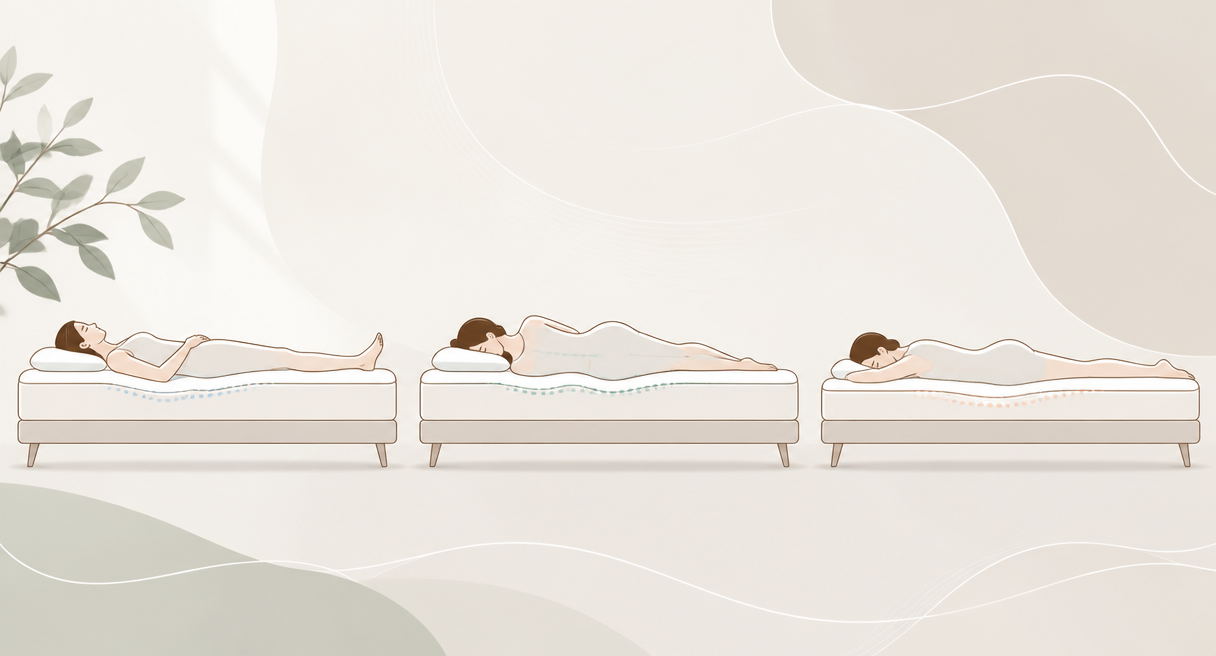
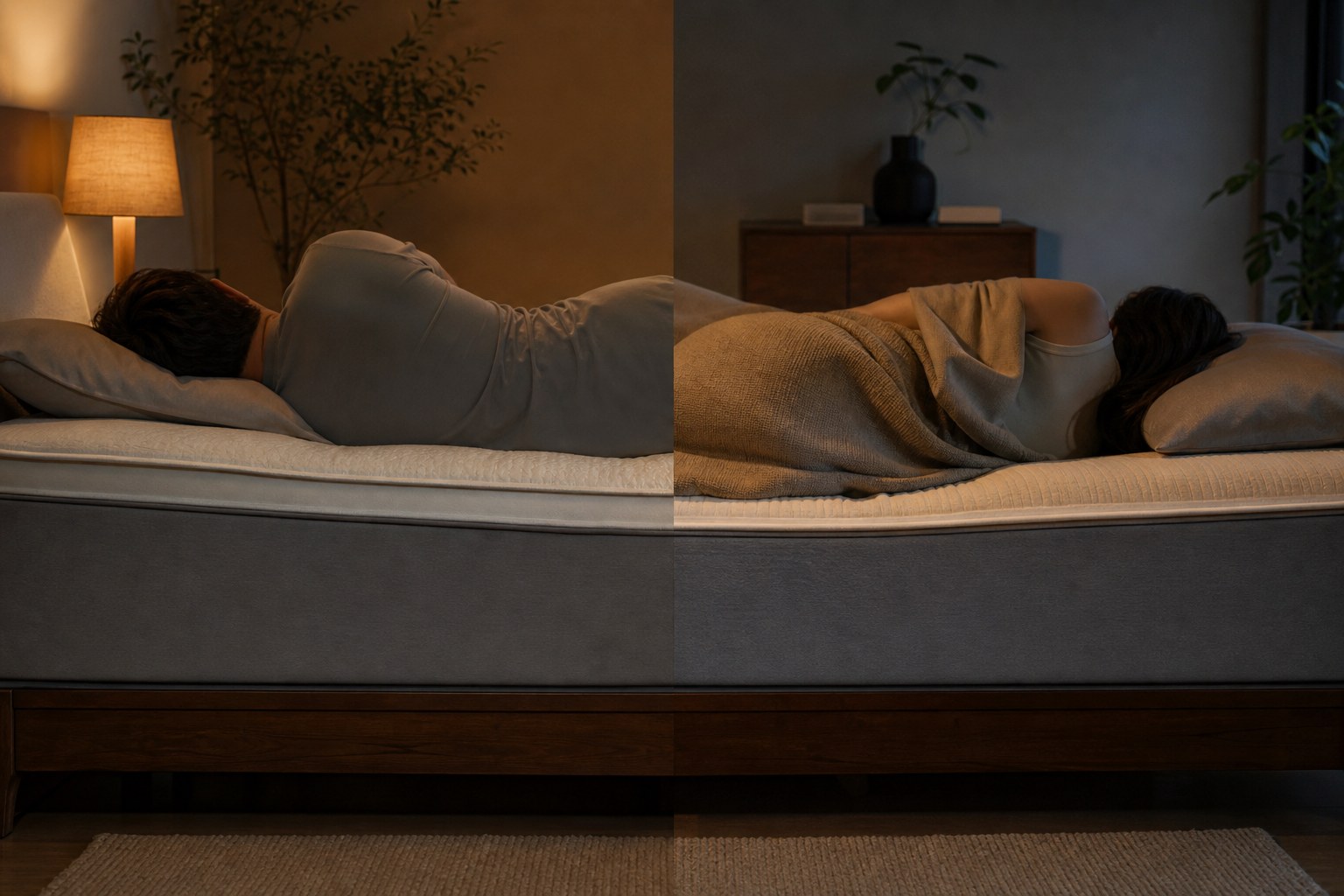
Side, back, or stomach, which sleeping position is best? Learn how each affects your spine, breathing, and pressure points, and how your mattress changes the equation.
Left or right, which side should you sleep on? Learn how each affects reflux, pregnancy, and breathing, and why shoulder and hip support matters for side sleepers.
Night sweating often comes from a warm room, heavy bedding, alcohol, or a heat-trapping mattress. Learn the common causes, when to see a doctor, and how to stay cool.